Introduction
An early stagediabetic footulcer is a small wound or sore that develops on the foot of a person with diabetes. It may look minor at first, but if ignored, it can quickly become serious. Many patients with early diabetes feet changes do not feel pain due to nerve damage, which makes early detection even more important.
Recognizing foot ulcer symptoms at the right time can prevent infections, hospitalization, and even amputation. At Quest Diabetic Clinic & Diagnostic Center, we often see patients who delayed treatment because the wound didn’t hurt. Early care makes a big difference.
What Is an Early Stage Diabetic Foot Ulcer?
An early stage diabetic foot ulcer is a shallow wound that affects the top layer of the skin. It usually appears on pressure areas like:
- Bottom of the foot
- Heel
- Toes
- Side of the foot
Unlike regular cuts, diabetic ulcers heal slowly due to high blood sugar levels and poor circulation.
Why Are Diabetic Patients at Higher Risk?
People with diabetes are more likely to develop diabetic foot ulcer symptoms because of:
1. Nerve Damage (Neuropathy)
High blood sugar damages nerves, reducing sensation. You may not feel pain even if the skin is injured.
2. Poor Blood Circulation
Reduced blood flow slows healing and increases infection risk.
3. Delayed Wound Healing
High glucose levels affect the body’s ability to repair damaged tissue.
4. Weakened Immunity
Infections spread faster in diabetic patients.
These factors make even small injuries dangerous for people with early diabetes feet complications.
Early Stage Diabetic Foot Ulcer: Signs & Symptoms
Recognizing foot ulcer symptoms early can prevent serious complications.
Common Foot Ulcer Symptoms
- Redness around a specific area
- Swelling
- Warm skin
- Thick callus with blood spots
- Small crack or open sore
- Fluid discharge on socks
- Unpleasant odor
Early Diabetic Foot Ulcer Symptoms
- Numbness or tingling
- Dry or cracked skin
- Minor cut that doesn’t heal within a few days
- Discoloration (dark, red, or bluish skin)
- Painless wound
Remember: Pain is often absent in early stage diabetic foot ulcer cases.
What Does an Early Stage Diabetic Foot Ulcer Look Like?
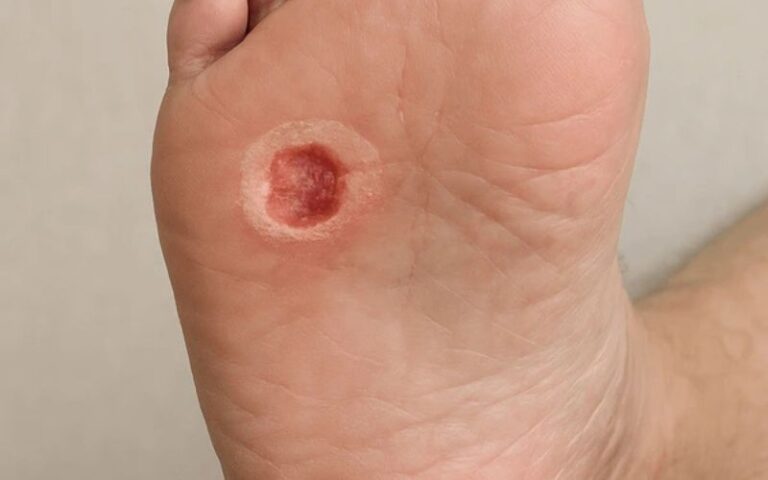
An early stage diabetic foot ulcer usually appears as:
- A small, shallow open sore
- Pink or red wound base
- Surrounded by thickened or hardened skin
- Mild swelling
It may look harmless, but without treatment, it can deepen and become infected.
When Should You See a Doctor?
You should consult a specialist immediately if:
- A wound does not improve within 2–3 days
- There is pus or foul smell
- Redness spreads around the wound
- Swelling increases
- You develop fever
At Quest Diabetic Clinic & Diagnostic Center, early diagnosis and proper wound management help prevent severe complications.
How Is an Early Stage Diabetic Foot Ulcer Diagnosed?
Doctors may perform:
- Detailed foot examination
- Sensation testing
- Blood sugar level check
- Circulation assessment
- Infection screening
Early medical evaluation is crucial for managing diabetic foot ulcer symptoms effectively.
Treatment for Early Stage Diabetic Foot Ulcer
Treatment depends on severity but may include:
✔ Wound Cleaning & Dressing
Professional cleaning prevents infection.
✔ Offloading Pressure
Special footwear or padding reduces pressure on the ulcer.
✔ Infection Control
Antibiotics if infection is present.
✔ Blood Sugar Management
Strict diabetes control speeds up healing.
✔ Regular Monitoring
Frequent follow-ups prevent worsening.
With early intervention, most early stage diabetic foot ulcers heal successfully.
Prevention Tips for Early Diabetes Feet Problems
Preventing ulcers is always better than treating them.
- Inspect your feet daily
- Wash and dry feet properly
- Moisturize dry skin (avoid between toes)
- Wear comfortable diabetic footwear
- Avoid walking barefoot
- Trim nails carefully
- Maintain controlled blood sugar levels
- Schedule regular diabetic foot checkups
Routine screenings at Quest Diabetic Clinic & Diagnostic Center can help detect problems before they become serious.
Conclusion
An early stage diabetic foot ulcer may appear small, but ignoring it can lead to serious complications. Identifying foot ulcer symptoms and seeking early treatment can save your foot and improve your quality of life.
If you notice any signs of diabetic foot ulcer symptoms, do not delay medical care. Early diagnosis and expert management at Quest Diabetic Clinic & Diagnostic Center can prevent infections and long-term damage.
Frequently Asked Questions
What are the first signs of an early stage diabetic foot ulcer?
Redness, swelling, callus formation, and a small wound that does not heal are early warning signs.
Can an early diabetic foot ulcer heal on its own?
Some minor wounds may improve, but diabetic ulcers should always be evaluated by a doctor to prevent infection.
Are all diabetic foot ulcers painful?
No. Many early stage diabetic foot ulcer cases are painless due to nerve damage.
How can I protect my early diabetes feet?
Daily inspection, proper footwear, and regular checkups are essential.