Introduction
Heart health plays a crucial role in overall well-being, and early detection of heart problems can help prevent serious complications. One of the most commonly recommended diagnostic tests for evaluating heart function is the Echo Test of Heart, also known as an Echocardiogram.
An echo test of heart is a non-invasive and painless imaging test that uses ultrasound waves to create real-time images of the heart. Doctors use this test to examine the heart’s chambers, valves, blood flow, and pumping ability. Because the test does not involve radiation, it is considered safe and widely used in modern cardiology.
At Quest Diabetic Clinic & Diagnostic Centre, advanced diagnostic facilities are available to help patients monitor their heart health accurately and detect potential problems at an early stage.
What Is an Echo Test of Heart?
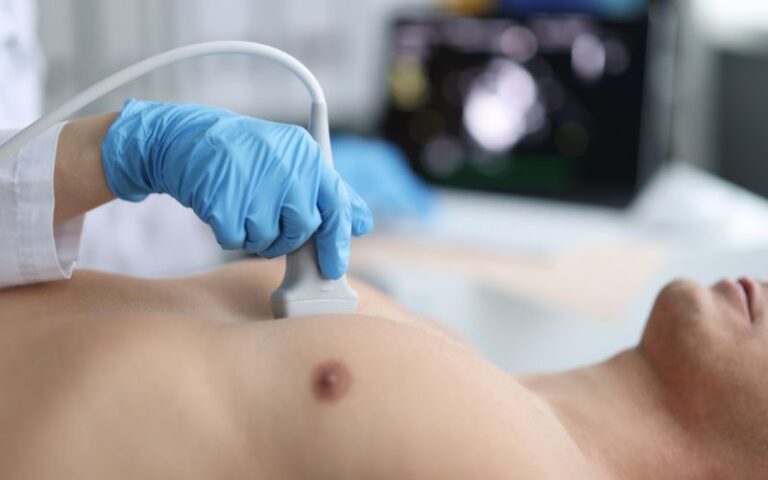
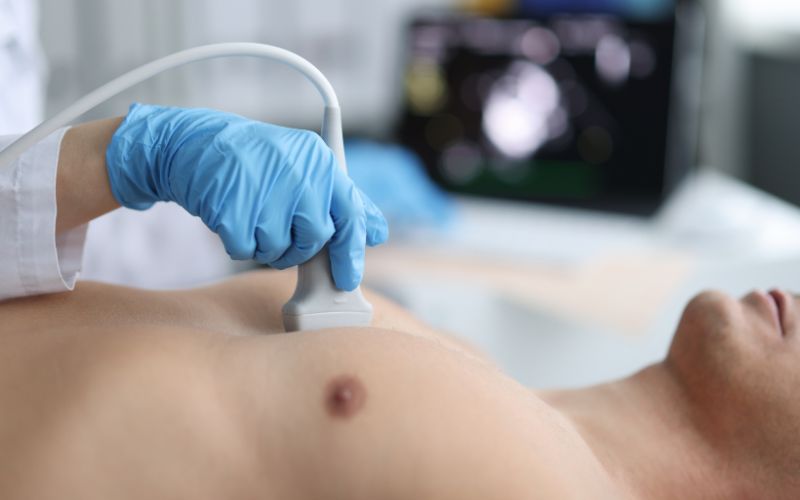
An echo test of heart is a specialized medical imaging test. During the procedure, ultrasound waves bounce off the heart’s chambers and valves, producing live images on a monitor. This allows doctors to see the heart in motion.
This test is essential for identifying abnormalities in the heart muscle or blood flow. In medical reports or prescriptions, it is also commonly referred to as:
- Heart Echo Test
- 2D Echo Test of Heart
- Cardiac Ultrasound
Why Is an Echo Test of Heart Done?
Your doctor may suggest an echo test of heart to assess several critical aspects of cardiac health, including:
- Checking Heart Structure: Evaluating the size and thickness of the heart walls.
- Detecting Heart Valve Problems: Identifying if valves are narrowed (stenosis) or leaking (regurgitation).
- Evaluating Pumping Ability: Measuring the Ejection Fraction (EF), which indicates how much blood the heart pumps out with each beat.
- Identifying Congenital Defects: Detecting heart structural issues present from birth.
- Detecting Fluid (Pericardial Effusion): Checking if there is excess fluid around the heart sac.
Symptoms That May Require an Echo Test
If you experience the following symptoms, an echo test of heart can help find the underlying cause:
- Chest pain or unexplained discomfort.
- Shortness of breath (especially during activity).
- Irregular heartbeats (palpitations).
- Swelling in the legs, ankles, or feet.
- Dizziness, fainting, or chronic fatigue.
Types of Echo Tests of the Heart
Depending on your specific condition, one of the following types may be performed:
- Transthoracic Echocardiogram (TTE): The most common type where a probe is moved over the chest.
- Transesophageal Echocardiogram (TEE): A probe is guided down the esophagus (food pipe) while the patient is sedated to get much clearer images from behind the heart.
- Stress Echocardiogram: Performed before and after exercise (treadmill) to see how the heart handles physical stress.
- Doppler Echocardiogram: Specifically used to measure the speed and direction of blood flow through the heart.
Echo Test of Heart Procedure
The procedure is simple, safe, and usually takes 20 to 40 minutes. Here is what to expect:
- The patient lies on an examination table, usually on their left side.
- A clear conductive gel is applied to the chest area.
- A technician (Sonographer) moves a small device called a transducer over the chest.
- The transducer sends sound waves that create live pictures on a monitor.
- There is no pain, and you can return to your normal activities immediately after.
How to Prepare for an Echo Test
- Standard Echo: No special preparation (like fasting) is needed. You can eat and drink normally.
- Stress or TEE Echo: Your doctor may ask you to fast for a few hours or avoid caffeine.
- Clothing: Wear a comfortable, two-piece outfit as you will need to remove your shirt/top.
- Medications: Always inform your doctor about any heart medications you are currently taking.
For accurate diagnosis and professional care, patients can undergo an echo test of heart at Quest Diabetic Clinic & Diagnostic Centre, where trained specialists and modern equipment ensure reliable results.
What Do the Results Show?
Once the test is complete, a Cardiologist will interpret the images. The report will detail:
- The strength of your heart’s pumping action.
- The condition of all four heart valves.
- Any signs of blood clots or tumors.
- Abnormalities in the aorta (the main artery).
Conclusion
The echo test of heart is one of the most reliable and commonly used diagnostic tools for assessing heart health. This painless and radiation-free test helps doctors evaluate heart structure, blood flow, and pumping efficiency in real time.
Early detection of heart problems through an echocardiogram can play a crucial role in preventing serious complications. If your doctor recommends this test, it is a simple and safe step toward better cardiovascular health. At Quest Diabetic Clinic & Diagnostic Centre, patients can access quality diagnostic services and expert guidance for maintaining a healthy heart.